Suspected Spinal Injuries

Applies to adult and pediatric patients
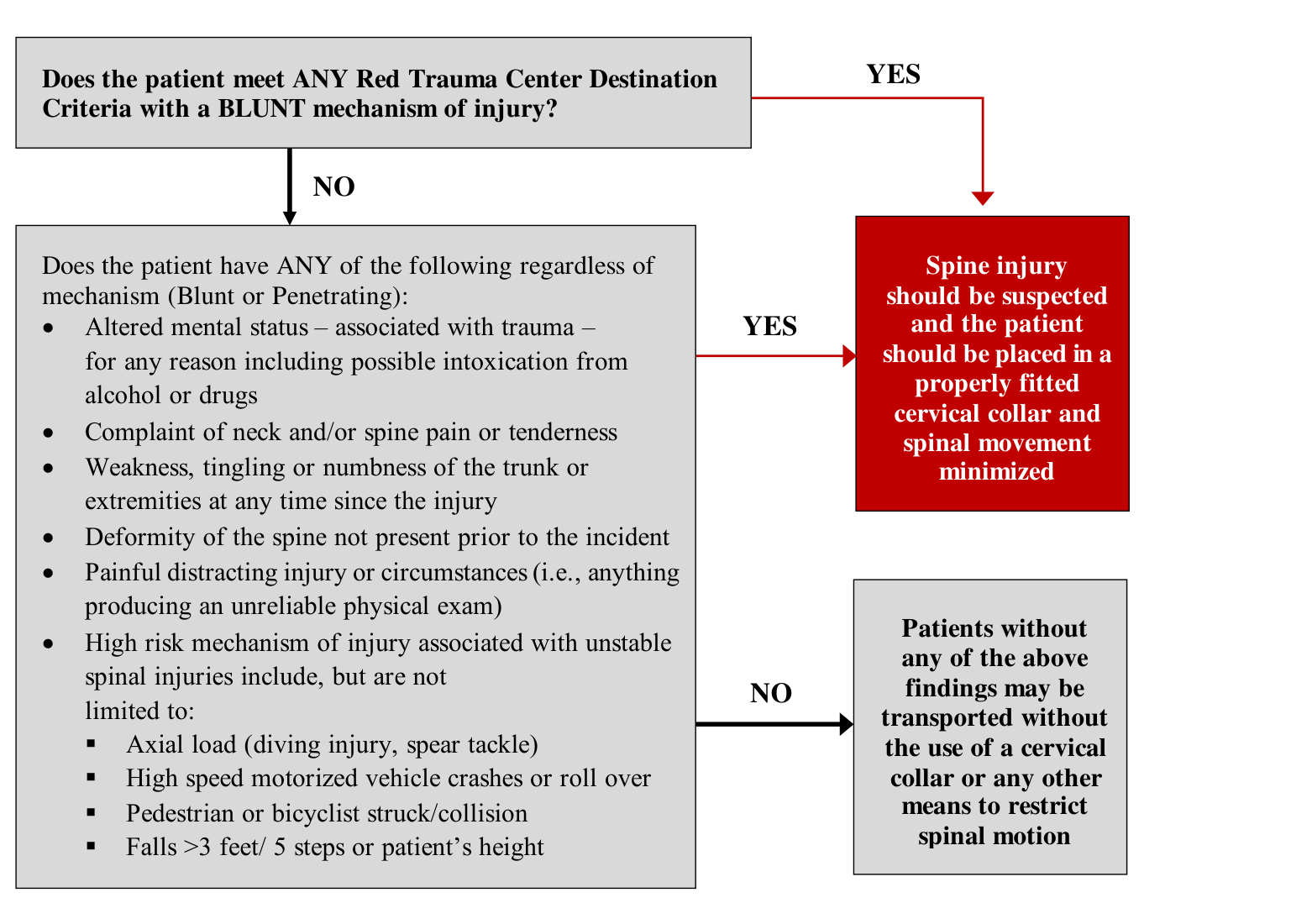
  • NO Spine injury should be suspected and the patient should be placed in a properly fitted cervical collar and spinal movement minimized Patients without any of the above findings may be transported without the use of a cervical collar or any other means to restrict spinal motion Does the patient meet ANY Red Trauma Center Destination Criteria with a BLUNT mechanism of injury? YES YES NO Does the patient have ANY of the following regardless of mechanism (Blunt or Penetrating): • Altered mental status – associated with trauma – for any reason including possible intoxication from alcohol or drugs • Complaint of neck and/or spine pain or tenderness • Weakness, tingling or numbness of the trunk or extremities at any time since the injury • Deformity of the spine not present prior to the incident • Painful distracting injury or circumstances (i.e., anything producing an unreliable physical exam) • High risk mechanism of injury associated with unstable spinal injuries include, but are not limited to: ▪ Axial load (diving injury, spear tackle) ▪ High speed motorized vehicle crashes or roll over ▪ Pedestrian or bicyclist struck/collision ▪ Falls >3 feet/ 5 steps or patient’s height

Key points

  • These guidelines should be used with caution in patients over age 65
  • Spinal movement can be minimized by application of a properly fitting rigid cervical collar and securing the patient to the EMS stretcher
  • Consider elevating the head of the stretcher no more than 30 degrees if concern for head injury
  • When spinal motion restriction has been initiated and a higher level of care arrives, patients may be reassessed for spinal injury (per this protocol)
  • When possible, the highest level of care on scene will determine if spinal motion restriction is to be used or discontinued (collar removed, etc.)
  • A long spine board is one of multiple modalities that can be used to minimize spinal movement. Electing not to use a long spine board will not constitute a deviation from the standard of care.
  • Long spine boards do not have a role in transporting patients between facilities